IN CHAINS – SHE CHOSE TO PLAY
In the golden plains of sub-Saharan Africa, young elephants are born into freedom. They walk alongside their mothers and grandmothers in vast matriarchal herds, navigating up to one hundred kilometers a day in search of food, water and companionship. In this wilderness, they forage from over a hundred different species of native vegetation – acacia bark, baobab fruit, wild grasses, marula leaves; fiber-rich, nutrient-dense food designed by nature to fuel their massive bodies and complex minds.
Noor Jehan was never granted that freedom. She was robbed of all of that.
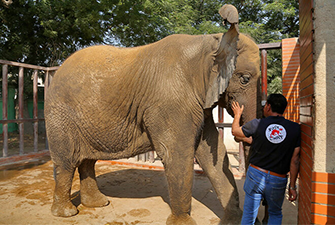
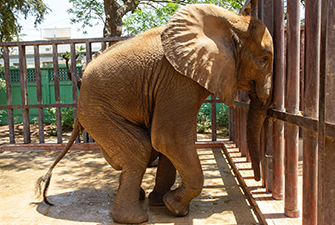
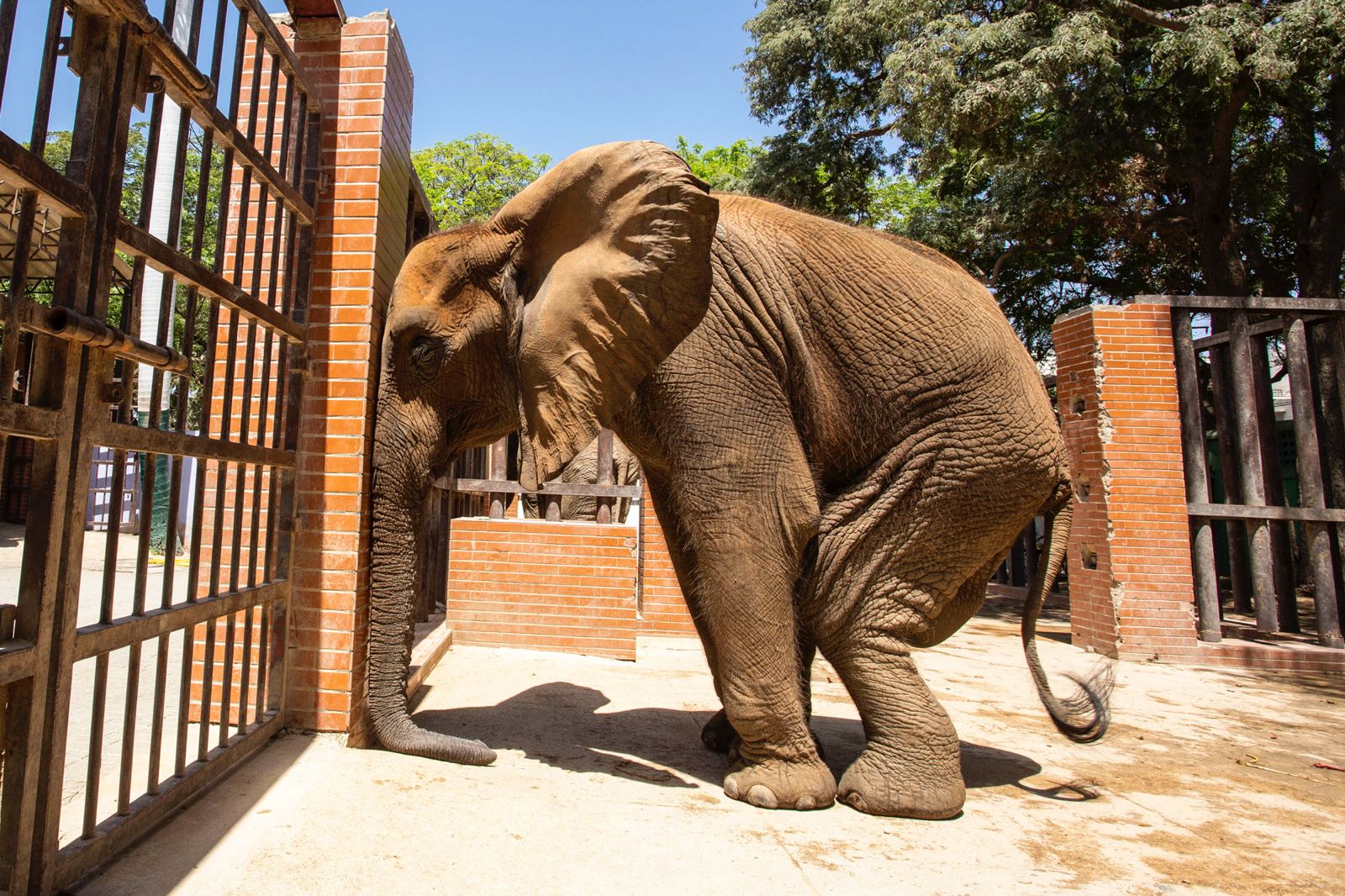
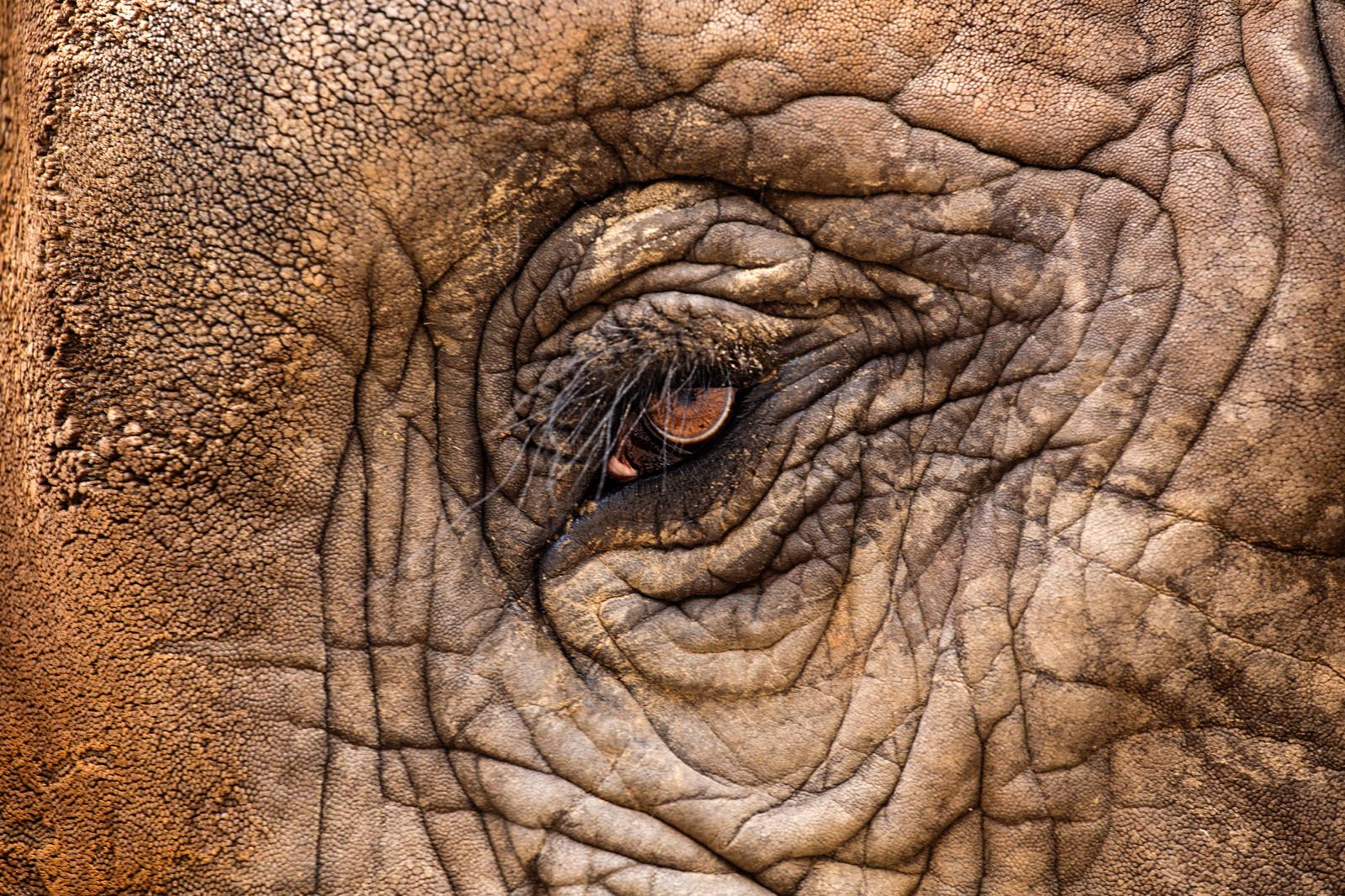
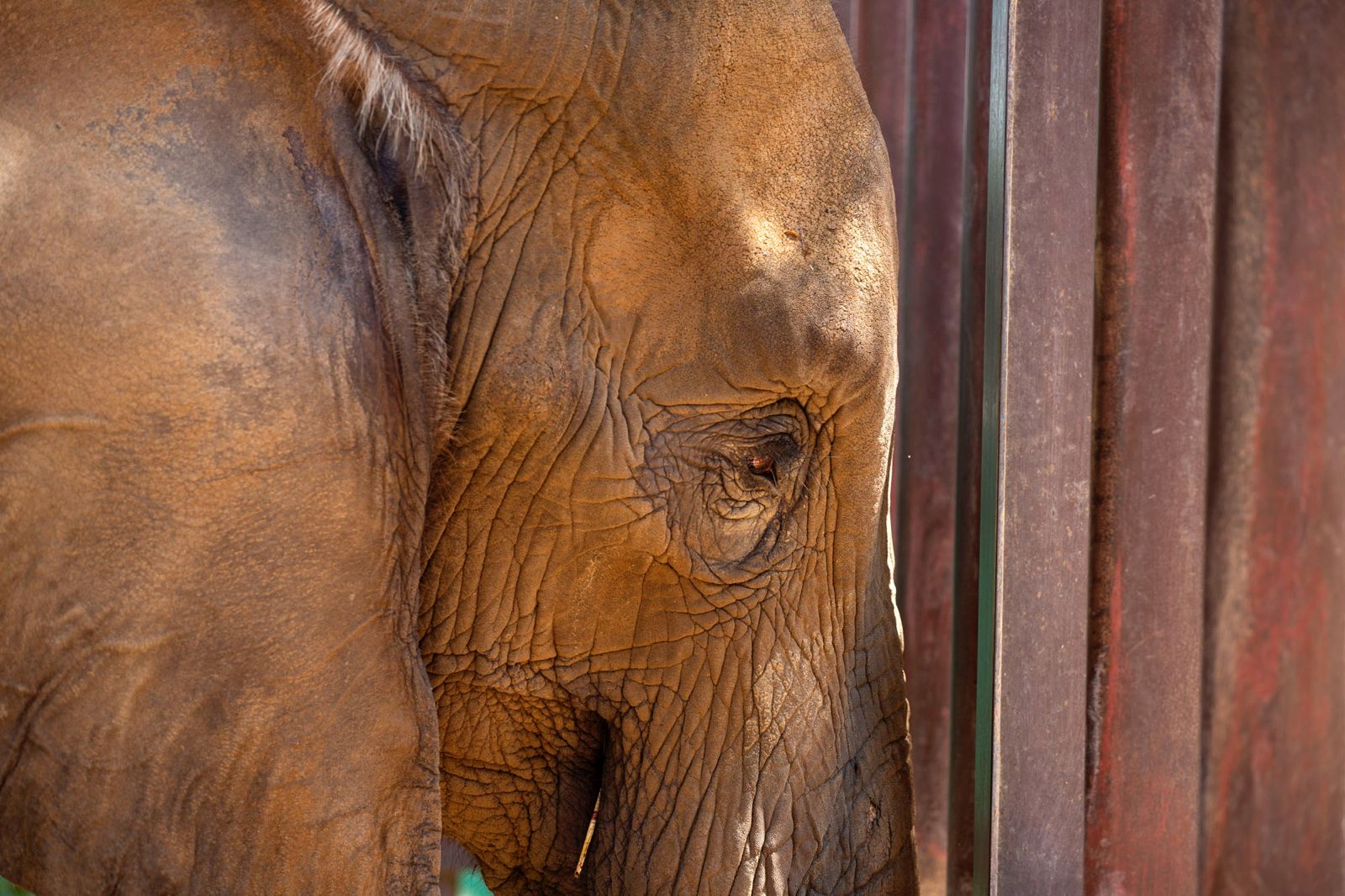
Stolen from her natural habitat, Noor Jehan was brought to Karachi Zoo a place far different from the world she was built for. In place of endless savannahs, she found concrete walls. In place of nurturing herd calls, she heard heavy traffic horns and clanging iron gates. Her days were monotonous, her nights chained in a cramped enclosure often forced to sleep in her own waste. There was no mud to roll in, no forest canopy to shield her, no stream to cool her thick skin. Instead, she was given a life measured in confinement, isolation, and survival.
Her diet, like her world, was stripped of authenticity. Gone were the fibrous greens and medicinal shrubs of Africa. Instead, she was fed sugary fruits bananas, sugarcane, apples, and carrots; not harmful in moderation, but dangerous as a staple. Wildlife nutritionists have warned that excess sugar in captive elephants can lead to insulin resistance, gastrointestinal imbalance and obesity. Elephants are built to graze for up to 16 hours a day, consuming over 150 kg of diverse vegetation to satisfy their physiological and behavioral needs. Noor Jehan’s diet was not only unnatural it was a slow betrayal of her biology.
And yet, amidst this concrete wilderness, Noor Jehan found an unexpected escape.
It began with a forgotten football, left behind by perhaps one of the zoo visitors. Her caretaker, Yousuf Maseh, a humble, self-taught man with no formal education but boundless compassion, offered it to the girls as a toy. Madhubala showed little interest. But Noor Jehan was curious. She watched from a distance as Yousuf and the other keepers kicked the ball around, their laughter echoing through the enclosure. Slowly, she crept closer. A sniff here. A nudge there. Occasionally, her trunk would feel the ball and then she would give it a puzzled look, as if asking, “What now?”.
And then, one day – a decision , “I want to be part of this.”
One afternoon, as Yousuf gently kicked the ball toward her, Noor Jehan stopped it with her foot. She hesitated. Looked up. Made eye contact. And then …. kicked it back. Clean. Deliberate. Precise.
It stunned Yousuf. Was it just a fluke?
He tried again.
And again, she stopped the ball, calculated her move and passed it right back to him.
This wasn’t randomness. This was intelligence.
What had seemed like play now became revelation. But this wasn’t just play, it was purpose.
This was no accident. Noor Jehan wasn’t mimicking, she was understanding the game. Over the next few weeks, this became a daily routine. She learned to stop the ball, assess the direction and pass it back like a trained player. Other caretakers joined in. Visitors were enthralled. Children cheered. Noor Jehan, they said, was Karachi Zoo’s
“football star”.
“Football for fruits”. she seemed to say.
However, behind the charm was a tragedy few could see.
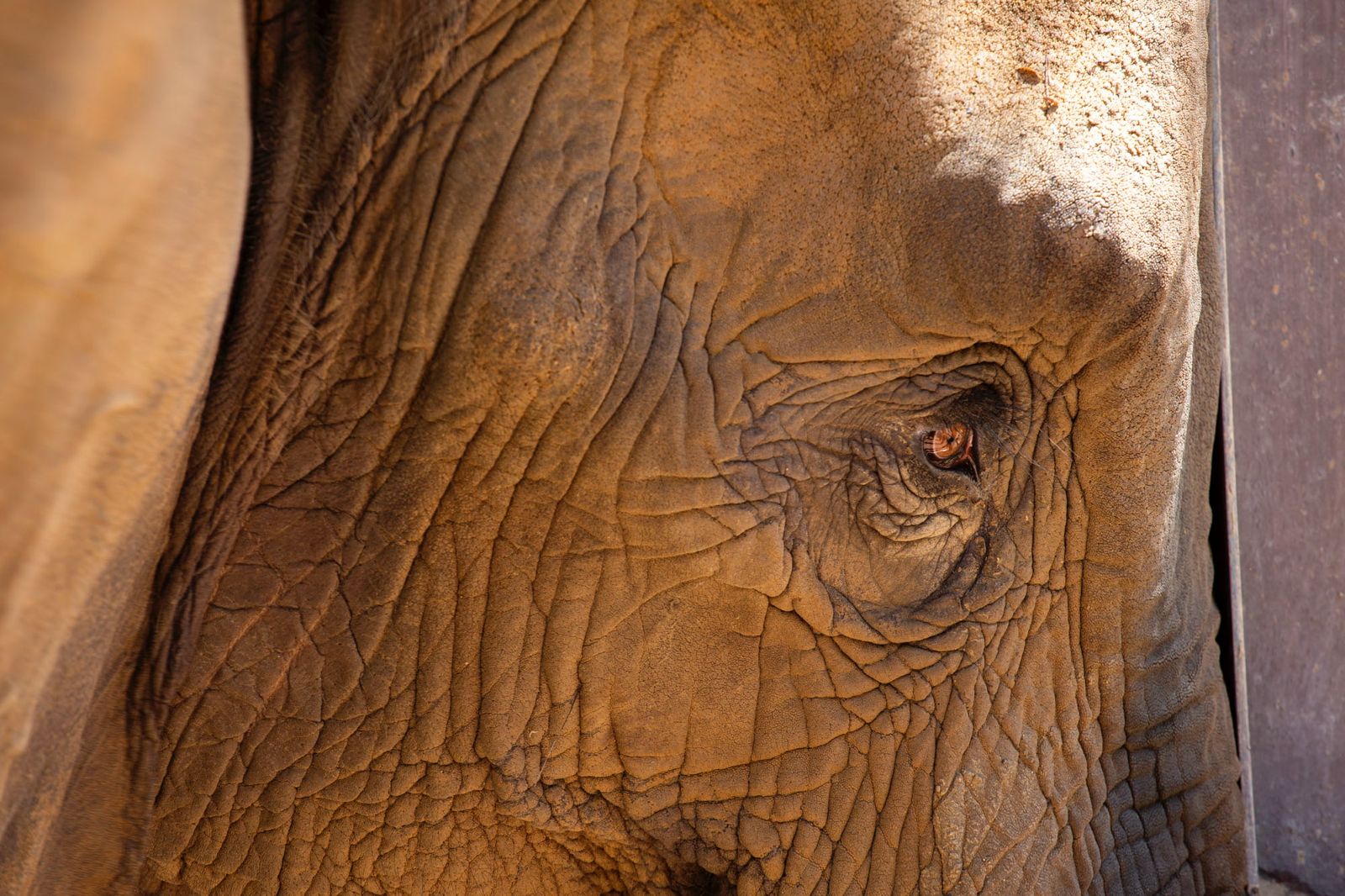
Elephants are among the most intelligent species on Earth. With a brain weighing over 5 kg, they possess remarkable memory, emotional depth, and a neocortex rivaling that of dolphins and great apes. In captivity, when denied social interaction and mental stimulation, they suffer from zoochosis – a psychological disorder marked by repetitive swaying, pacing, rocking and in extreme cases, self-harm.
Football was Noor Jehan’s way of resisting that fate. It was her therapy, her act of agency, her fight to stay whole in a world that had broken everything else.
The zoo? It saw an opportunity.
And as long as it was attracting visitors who not just paid to watch but also covered the cost of her food this was a win-win for the zoo officials. As long as the animals help bring in the money it is good news! This was and has been the only objective of Zoos all around the world.
With elephant rides no longer viable, thanks to the anatomical fact that elephant spines are not built for bearing weight (the thoracic vertebrae contain sharp protrusions that can be damaged by riding), the zoo pivoted. Previously, Asian elephants had been used for rides at Karachi Zoo. An exploitative practice still common in parts of India, Sri Lanka, and Thailand. But African elephants like Noor Jehan were larger, more sensitive and harder to control. The riding platform built for visitors now stands unused the concrete relic of a cruel past remains intact at Karachi Zoo.
So football became the new attraction.
Crowds came. They clapped. They threw fruit over the fence. The zoo celebrated. Revenue was up. Everyone praised the “happy” elephant who played with humans. But Noor Jehan wasn’t performing for them. She was surviving.
She and Madhubala shared a barren enclosure with just one tamarind tree. At night, they were chained, unable to move, sleep, or lie down comfortably. The chains left abrasions on their skin. The cold concrete damaged their joints. The stench of urine and feces soaked their sleeping area. These conditions have been proven by numerous veterinary reports and welfare assessments to shorten lifespan, weaken immunity and deteriorate mental health in captive elephants.
Still, Noor Jehan gave. She played. She smiled. She kicked the ball back. For the crowd. For the zoo. But most of all, for herself.
Behind her bubbly, mischievous spirit was a deeply empathetic, highly intelligent being who understood far more than she let on. She was the stronger one …. protective of Madhubala, receptive to Yousuf’s gentleness, aware of her surroundings. She radiated warmth and emotion, even when her own body was failing.
She gave the best of herself to the crowd, always the star, always playful, always warm. Sweet, mischievous, intelligent Noor Jehan who should have been splashing in watering holes and leading young calves through the bush was instead on show, dancing for fruit, enduring nights in chains, and breathing smog instead of fresh savannah air.
Her bond with Madhubala, her companion, was her only sense of herd. Together, they found joy in old tyres, shared glances and their small acts of defiance against a system that had failed them.
This chapter of her life – the football, the laughter, the crowds; was not a triumph. It was a testament to how animals adapt, even in the most unnatural conditions; and how their will to live pushes through even when the world is relentlessly cruel.
The wild savannah had now been replaced with rusted bars.
The herds replaced with concrete walls.
The massive waterholes replaced with a small dirty pond.
The freedom to roam, to rest, to raise young – replaced with chains and noise and exploitation.
And yet she endured.
This was her chapter of resilience and football was her shield. But it was only the beginning.
The worst was yet to come.


Leave A Comment